Chelsea Green Says Wrestling Isn't That Serious — And Maybe She's Right
“Just enjoy it. It’s not that serious.”
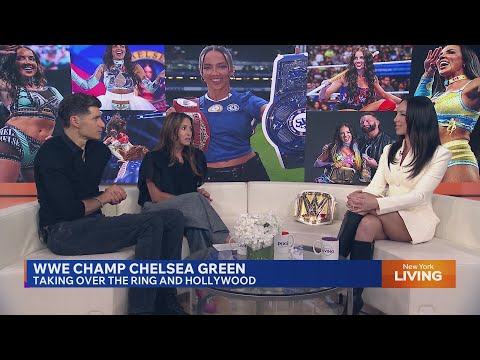
Coming from Chelsea Green, those six words might be some of the more interesting words spoken about professional wrestling this week. During a recent appearance on PIX11 News, the reigning WWE Women’s Champion was asked that question wrestlers have heard approximately 14 billion times:
Is wrestling fake?
Green admitted the question drives her nuts.
And considering she pointed out that she's broken her ankle in two places and suffered a broken orbital bone this year alone, you can probably understand why. Green compared professional wrestling to watching a soap opera or watching a stunt performer. We don't demand that an actor prove the emotions they're portraying are legitimate before allowing ourselves to become invested in the story.
Wrestling, however, has always been treated a little differently.
The outcomes may be predetermined. The stories may be written. But the ring is real. The ropes are real. The floor is real. Gravity certainly remains undefeated. As Green put it, you can't fake jumping off the top rope. But the part of her interview that really stuck with me wasn't another entry into the decades-old “Is wrestling fake?” debate.
It was much simpler.
"Just enjoy it."
Because somewhere along the way, professional wrestling fans became very, very good at understanding how the magic trick works. Maybe sometimes we're so busy studying the magician's hands that we forget we're supposed to enjoy the trick.
When Wrestling Didn't Want You to Know: Professional wrestling hasn't always had this relationship with its audience. There was a time when the business was divided largely into territories. Depending on where you lived, you might grow up watching a completely different collection of wrestlers than somebody several states away. Promotions protected their markets. Wrestlers traveled from territory to territory. Television was regional. And protecting the illusion of what happened inside the ring was woven deeply into wrestling culture.
Then wrestling changed.
Cable television expanded.
WWE went national.
WrestleMania arrived.
Eventually came pay-per-view, the Monday Night Wars, the internet, message boards, newsletters, dirt sheets, podcasts, YouTube, X, Reddit, TikTok and an endless supply of information about an industry that once survived partly because you didn't know everything.
Today's fan doesn't merely watch the show. We know who's booking it. We debate creative. We know when contracts expire. We discuss quarter-hour ratings. We know somebody might be leaving a promotion months before their character does. We know when a wrestler's real-life injury forces a story-line change. Sometimes we know who produced the match we just watched before we've finished talking about the match itself.
And I'm not necessarily criticizing any of that.
I'm a wrestler who became a wrestling writer.
Clearly, I enjoy looking underneath the hood.
But there's a difference between understanding professional wrestling and allowing that understanding to prevent you from experiencing professional wrestling.
We've Gone From Kayfabe to Knowing Everything: Modern wrestling fandom exists in a fascinating contradiction. Fans know more about the inner workings of professional wrestling than at perhaps any other point in its history. Yet we still desperately want wrestling to make us forget that knowledge.
Think about the moments that truly work.
A surprise return hits and an arena erupts.
A wrestler finally wins the championship after years of coming up short.
Someone turns heel and for a few seconds you aren't thinking about booking philosophy, contract negotiations or whether the segment will pop a rating.
You're angry.
Or you're crying.
Or you're standing in your living room yelling at a television.
For that moment, they got you.
And isn't that the whole point?
That's not a wrestling fan being stupid.
That's a wrestling performer being good.
Knowing the Ending Is Predetermined Doesn't Make the Journey Fake: We know movies aren't documentaries. We still cry when a character dies. We know actors aren't actually superheroes. We still cheer when the hero finally wins. Nobody walks out of a Broadway production complaining that the performers rehearsed beforehand.
Yet professional wrestling has spent decades defending itself against the word “fake.” I understand why wrestlers bristle at it. Because predetermined and fake aren't synonyms.
There is an art to making someone believe something for the length of a match. There is an art to knowing when to speed up and when to slow down. When to give the audience what they want and when to make them wait. When to sell. When to fire up. When to let silence breathe and when to give a crowd the moment they've been begging for.
There is an art to taking thousands of strangers and making them feel the same emotion at exactly the same time. And yes, there is an art to doing all of that while another human being is throwing you toward the ground. That last part tends to hurt!
Criticism Isn't the Problem: None of this means fans shouldn't criticize wrestling. That's part of fandom too. Bad wrestling exists. Bad booking exists. Matches don't always work. Stories sometimes fall apart. Performers occasionally miss the mark. Fans are allowed to dislike things. In fact, one of the beautiful things about wrestling is arguing about it afterward.
The problem comes when analyzing wrestling replaces experiencing it. When every push becomes a conspiracy. Every loss becomes a burial. Every imperfect match becomes evidence that someone can't wrestle. Every wrestler becomes either overrated or underrated. Every company becomes a team you're apparently required to defend against every other team.
WWE versus AEW.
AEW versus WWE.
Old school versus modern.
Sports entertainment versus professional wrestling.
And somewhere underneath all of that noise is the thing that made most of us fall in love with wrestling in the first place.
A ring.
A story.
A hero.
A villain.
And an audience willing to go along for the ride.
Maybe Chelsea Green Has a Point: Professional wrestling has evolved enormously from the territory days. The curtain isn't simply pulled back anymore. There practically isn't a curtain. Wrestlers have podcasts. Fans follow them through airports on Instagram. Companies produce documentaries showing creative meetings and backstage conversations. Wrestlers who were trying to destroy one another on television Friday night can post pictures together Saturday morning.
Kayfabe didn't exactly die. It evolved. The challenge for modern professional wrestling isn't convincing us that everything is legitimate. We already know better. The challenge is making us care anyway. And when wrestling is great, it does.
Maybe that's what Chelsea Green's comment ultimately gets right. You don't have to surrender your intelligence to enjoy professional wrestling. You don't have to stop analyzing it. You don't have to pretend you don't know what you know. Sometimes you just have to give yourself permission to be a fan.
Watch the entrance.
Pop for the return.
Boo the heel.
Argue about the finish afterward.
And when someone climbs to the top rope, remember that whatever happens next may be part of the show — but the person jumping off it is very, very real. Sometimes it's okay to stop dissecting the magic trick.
Sometimes you should just enjoy the magic...